AI Technology Helping Detect Breast Cancer Earlier
Breast Cancer Awareness Month is a reminder that early detection saves lives. Now, experts say artificial intelligence (AI) is becoming a powerful new tool in spotting cancers sooner and more accurately.
CBS News chief medical correspondent, Jon LaPook, MD, says AI is starting to change the way mammograms are read and interpreted.
“There are two different uses of AI,” he said. “One is … you have a mammogram done, and the AI, even before the radiologist sees it, can put a little box around areas that are potentially dangerous. … Normal breast tissue looks white, and a calcification that may be indicative of breast cancer is also white. So it’s like looking for a snowball on a snow drift. Sometimes human eyes are not as good as the AI at finding it.”
Researchers are also studying whether AI can help predict who might develop breast cancer in the future. By looking at hundreds of thousands of mammograms, the technology could one day show which women are at higher risk years before cancer appears.
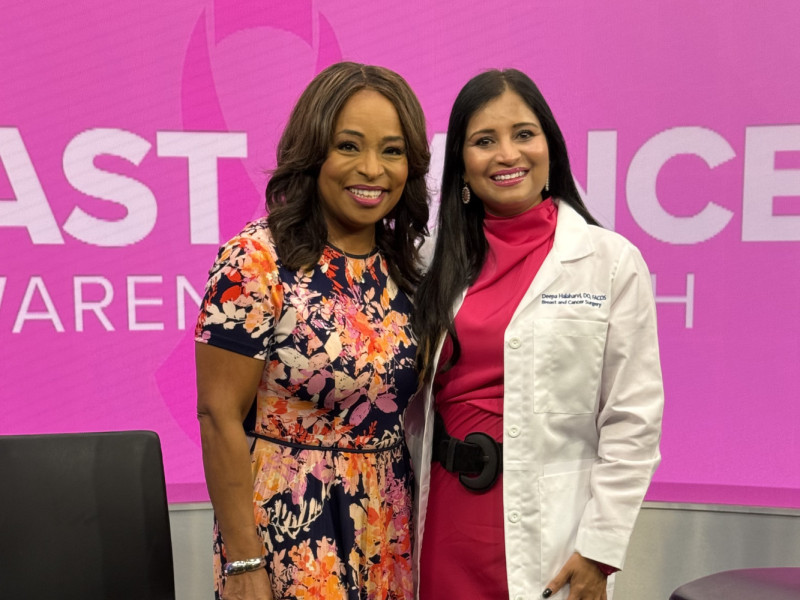
Deepa Halaharvi, DO, a breast surgeon at OhioHealth and a breast cancer survivor, agreed the technology is promising. She said that standard mammograms miss about 20 percent of cancers.
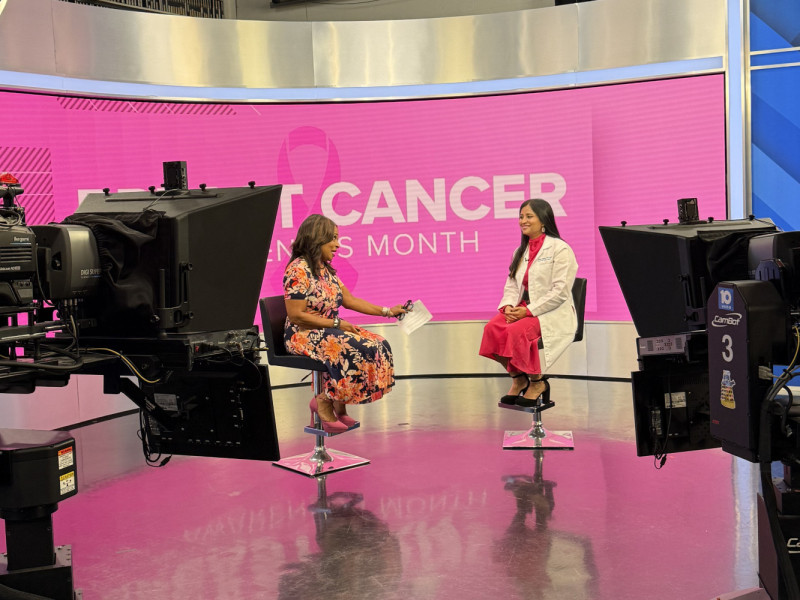
“What AI can do is improve detection,” Dr. Halaharvi told 10TV News anchor Tracy Townsend. “It can also provide a personalized risk assessment for women who are not yet screening age to get mammograms earlier than age 40 … Dense breast is white and cancer is white, and sometimes it's really difficult to find cancer in those dense breasted women.”
Still, she cautioned that AI should not be seen as a replacement for medical expertise.
“It can be used in conjunction with a specialist, who then will help the person in getting personalized risk assessment, looking at their breast cancer risk factors and provide their personalized screening program for that person.”
Dr. Halaharvi also stressed the importance of regular mammograms.
“An average-risk woman, who does not have family history of breast cancer, should start their mammography at age 40,” she said. “For those women who are considered high risk for breast cancer, meaning their family history of breast cancer, they have a genetic mutation, they need to start 10 years younger than the family member who was diagnosed with breast cancer.”
Technology is also helping streamline the patient experience once screening begins. At OhioHealth, patients receive normal results through the online portal, MyChart. If anything abnormal is found, patients get a call from a breast health nurse navigator to schedule additional imaging or a biopsy. The goal, Dr. Halaharvi said, is to provide clarity and support as quickly as possible.
“We prepare patients when they come in to see us,” she said. “You will get a message on MyChart, but I'll be calling you as soon as I can.”
And her message during Breast Cancer Awareness Month is simple.
“Get screened. This can save your life. Screening mammography decreases mortality by about 30 percent.”
To learn more about OhioHealth Cancer Care, click here.