Marion Agencies Share Progress at Community Town Hall on Behavioral Health
Key Takeaways:
- Marion-area organizations are strengthening coordination among behavioral health, addiction and developmental disability services to better support individuals and families.
- Community partners are working to connect residents with resources earlier, including peer support, housing, food and other services.
- A community town hall invited residents to share feedback and help shape efforts to improve access to care and reduce mental health stigma.
Marion-area organizations are working together to strengthen connections to behavioral health, addiction and developmental disability resources. On Tuesday, Oct. 20, they invited community members to help shape the next steps.
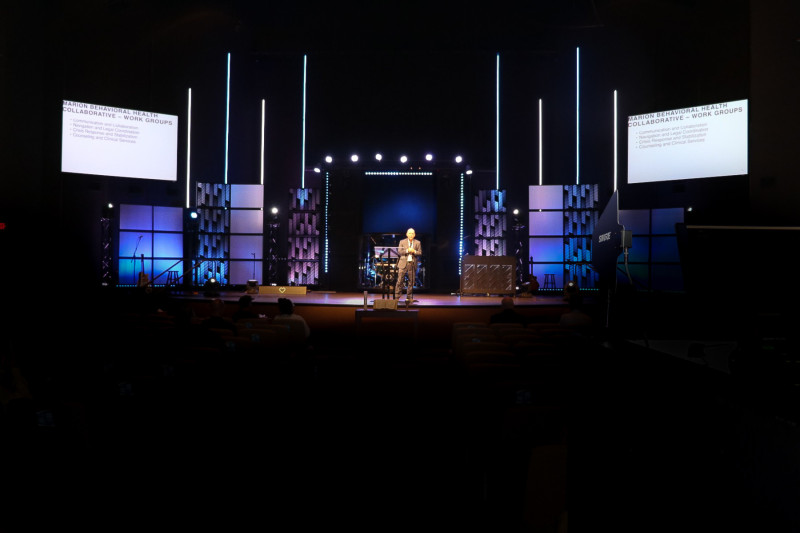
The community town hall at Marion First Church of the Nazarene was the third gathering in a series focused on improving coordination among local agencies. The event highlighted progress, shared available resources and gave residents an opportunity to discuss how agencies can better support individuals and families throughout the region.
The summit series is presented in collaboration with OhioHealth Marion General Hospital, The Ohio State University at Marion, Marion Community Foundation, Marion County Courts, ADAMH and the Marion County Board of Developmental Disabilities.
“We’re bringing agencies together so we can work more effectively and create a stronger continuum of care,” said Jim Parobek, president of OhioHealth Marion General Hospital. “One of our main priorities at Marion General is behavioral health services for the community.”
The collaboration is focused on helping individuals and families connect with resources earlier and ensuring they have support throughout their care journey.
“We find many people coming to us through the emergency room when they’re in crisis. We want to make sure people who are starting to experience behavioral health challenges, or their family members, know what support they can access before they need the emergency department.”
That support can extend beyond clinical care to include connections to food, clothing, housing and follow-up services. By improving coordination among organizations, the initiative aims to help people navigate available resources and maintain support as their needs change.
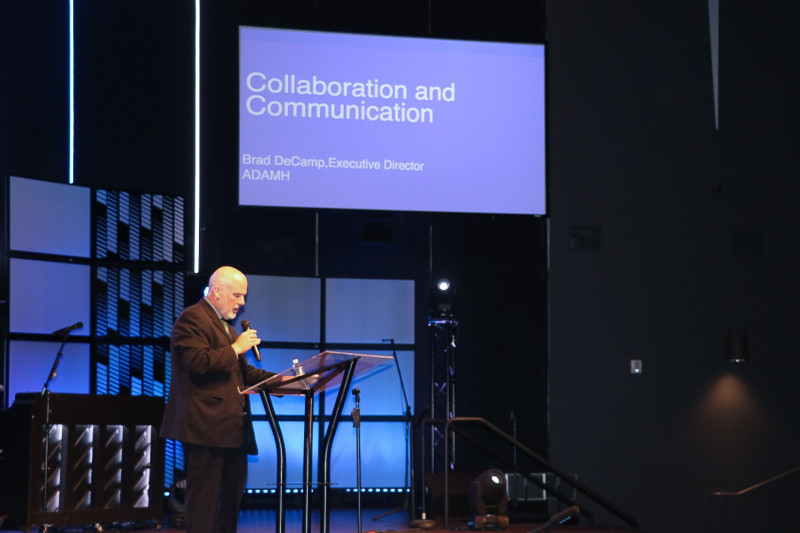
Brad DeCamp, executive director of the Crawford-Marion Alcohol, Drug Addiction and Mental Health (ADAMH) Board, said peer support is one way to help bridge gaps between services and build connections with individuals seeking assistance.
“It is a really powerful player in terms of bringing those forces together, because there are things that a peer can relate to. Someone who's walked a mile in their shoes and can build that rapport with people,” DeCamp said.
He also emphasized the importance of keeping conversations about mental health visible and helping people understand that treatment and support can make a difference.
“We collectively just have to keep talking about things,” DeCamp said. “We have to keep it in front of people, making sure that they understand that there are services available and that people can thrive under the right circumstances.”
Community participation is an important part of that effort. The Oct. 20 gathering gave residents an opportunity to hear about the work underway, share their experiences and identify areas where outreach and services could improve. Participants heard presentations from four work groups and had the opportunity to discuss what stood out, what might be missing and how existing efforts could be expanded.
Nicole Bussey, a Marion resident who attended the event through Marion Matters, said she appreciates seeing organizations work together to address community needs.
“Mental health is such a real thing for people. It can change in an instant,” Bussey said.
Having grown up in Marion, Bussey said she has seen efforts to improve the community and hopes those efforts reach more neighborhoods.
“This means a lot, actually, because I see Marion really trying,” Bussey said. “I see everybody trying and I hear about it, read about it. Now the rest of the community needs to get involved to make things better.”
Bussey also said greater understanding can help people feel supported rather than judged and play a role in reducing stigma around mental health conditions.
“There is a lot to do in this space,” Parobek said. “I'm proud of the work that we're doing and how many people have come together, because we all want this to get better and we're all working together.”
“There's always hope when there's a community that cares,” DeCamp said. “There are a lot of people who care here in Marion County for those individuals, for their neighbors, and who want to do their best to help them.”