

Mansfield Hospital's Structural Heart Team Completes 500th Left Atrial Appendage Occlusion Procedure
OhioHealth Mansfield Hospital’s Structural Heart Program has reached another major milestone. The team performed its 500th left atrial appendage occlusion surgery last week, a common, non-invasive procedure used to prevent patients with Atrial Fibrillation from having a stroke. Mansfield Hospital has been performing this procedure since 2019. During that time, cardiologists feel they’ve prevented hundreds of strokes, and more importantly, saved lives.
While a left atrial appendage occlusion surgery sounds rather complex, the procedure can take as little as an hour. Interventional cardiologists use a catheter to insert a mechanical device to close off the left atrial appendage in patients with AFib. Some of the more popular devices used in this procedure are the WATCHMAN™ device and Amulet™ device. By closing off the left atrial appendage, these devices are preventing blood clots from going into the blood stream. Patients with AFib are at an increased risk of a stroke because blood can collect in the left atrial appendage, or pouch, and form clots. When the heart pushes these clots out, it can travel to the brain, causing a stroke, or any other part of the body. In order to prevent this, providers can either put the patient on blood thinners, or the patient can get their appendage closed off.
 Not everyone is the right candidate for a left atrial appendage occlusion. Patients with AFib who qualify have to have a medium to high risk of stroke, and a reason for not tolerating blood thinners. Reasons can range anywhere from the cost of the medication, to being at an increased risk of bleeding. According to Yohannes Bayissa, MD, medical director of the Structural Heart Program at Mansfield Hospital, this procedure is both safe and effective. "Right now, it's a mainstay treatment in the space of AFib for those with medium to high stroke risk and a history of intolerance to blood thinners” said Dr. Bayissa. “The device is very safe procedure-wise. Major complications such as bleeding around the groin or heart are below 0.5%.” On top of that, according to Atish Mathur, MD, an interventional cardiologist at Mansfield Hospital, this procedure reduces your risk of dying. “The biggest problem with blood thinners is that when patients are left on them, they’re at a significantly higher risk of major bleeding,” said Dr. Mathur. “We know that once a person has a major bleeding, the odds of them dying are about 11 times higher. So by preventing those bleeding episodes, this device not only prevents you from having a stroke, it actually prevents dying from this potential bleeding,”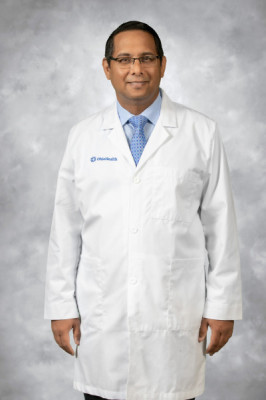
KEEPING CARE LOCAL
Mansfield Hospital is the only hospital in Richland County and its surrounding counties to offer this elective procedure. Structural heart procedures, like this one, can only be performed in Level III Catheterization Labs. Level III Cath Labs require a back-up open heart surgeon available for all procedures. “We are here to provide state-of-art care for the patients in our community, locally,” said Dr. Mathur. “We don't want patients or families to have to travel long distances to get the high-quality care that we can provide here at Mansfield Hospital.”
If you think you’re a good candidate for a WATCHMAN™ or AMULATE™ procedure, reach out to your primary care provider. They can refer you directly to a structural heart cardiologist, or to a general cardiologist. To learn more about Mansfield Hospital’s heart and vascular services, click here.
