

OhioHealth Invests More Than $265 Million Into Mansfield, Shelby Communities Over Last Decade
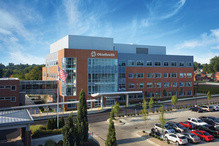
A non-profit hospital system is changing the caliber of health care for people in north central Ohio. It’s been ten years since MedCentral Health System made the decision to partner with OhioHealth in 2014. While a decade isn’t considered a long time for a hospital that’s been around for more than a century, the growth and improvements both OhioHealth Mansfield and Shelby Hospitals have seen are vast.
According to the OhioHealth Finance Department, the system has invested more than $265 million into the north central region since 2014. That area includes Richland, Crawford, Huron, Ashland, Holmes and Knox counties. While a quarter of a million dollars is a hugely impressive number in itself, the president of OhioHealth Mansfield and Shelby Hospitals emphasizes the meticulous thought that went into how the money was spent. “We focus on a disciplined approach to decision making that helps us make intentional decisions based on feedback from the communities we serve, the gaps we see in care within those communities, and align that with our vision to provide exceptional care for all through experiences that earn a lifetime of trust,” said Curt Gingrich MD. For Richland County, Ashland County, and Crawford County, that meant adding more access to primary and urgent care, as well as two freestanding emergency departments. There are now new OhioHealth physician offices in Balgreen, Shelby, Lexington, and Galion, with an urgent care in Bucyrus. “We saw a need and received feedback about many desired choices when it comes to emergency care and outpatient imaging,” said Dr. Gingrich. “As a result, we were able to open the Ontario and Ashland free standing EDs. Through these projects, we have more rapid assessments of potentially life-threatening conditions and, if needed, connect them to a hospital setting. The addition of strategically placed primary care options has helped patients stay closer to home for their wellness and chronic disease care as well.”
While OhioHealth has expanded throughout the region, it has also significantly built onto both hospitals. Since 2014, Mansfield Hospital has grown both structurally, as well as clinically. The hospital’s Medical Office Building was built in 2014. The nearly $50 million dollar project included a 10-suite surgery department, as well as exam rooms and administration areas. The hospital also installed a new rooftop helipad in 2022, worth more than $2 million. Yet Dr. Gingrich says the investments that have made the biggest differences have been in specialized care, like the hospital’s structural heart program. “For the last 21 years, Dr. Greg Eaton and Dr. Mary Alton have worked with their colleagues to create a world class heart and vascular program with outcomes similar to other larger national health care facilities,” said Dr. Gingrich. “The heart imaging program supports advanced heart care and screening and the structural heart program means patient who have heart valve problems may be able to receive a valve without needing open heart surgery.” As for Shelby Hospital, the focus has been on keeping care local while benefitting from a strong health system focused on quality care in a safe environment. OhioHealth has invested further into Shelby Hospital’s medical oncology and infusion services, cardiology, interventional pain management, orthopedics and women’s health. Part of this investment included $1.4 million dollars-worth of imaging equipment to make sure the Shelby community has access to state-of-the-art technology. Dr. Gingrich pointed out another added bonus is the support from the community. The Shelby Hospital Foundation has provided nearly $250,000 in philanthropic efforts. Their unwavering support demonstrates the commitment the Shelby community has for its hospital.
What’s next?
While it’s difficult to plan far ahead in healthcare, Dr. Gingrich says hospital leadership is constantly preparing for the years ahead, focusing on the communities’ needs. The population in Richland County and its’ surrounding counties is aging. This is a big reason why primary care and wellness are a big priority for the hospitals. As for other health needs, they’ll continue to monitor the data, but Dr. Gingrich says whatever gaps of care arise, they’ll focus on keeping that health care at home. “Like many critical access hospitals, OhioHealth Shelby plays an important part in the care provided locally and as a partner to the care provided at OhioHealth Mansfield,” said Dr. Gingrich. “Many patients requiring specialized care need support transitioning from significant illnesses or surgeries. Those patients who meet the criteria can come into the transitional care program at Shelby. While in the hospital, they receive rehab services and their progress and medical conditions can be monitored to ensure a successful transition from a tertiary care center like OhioHealth Mansfield back to home.” Dr. Gingrich also noted OhioHealth is a not-for-profit system, so all generated revenue is invested back into the community and employees. And with 2,800 associates, the largest in the region, supporting and retaining those professionals remains a key investment for the system.
