OhioHealth Joins First Responders in Large-Scale Disaster Simulation
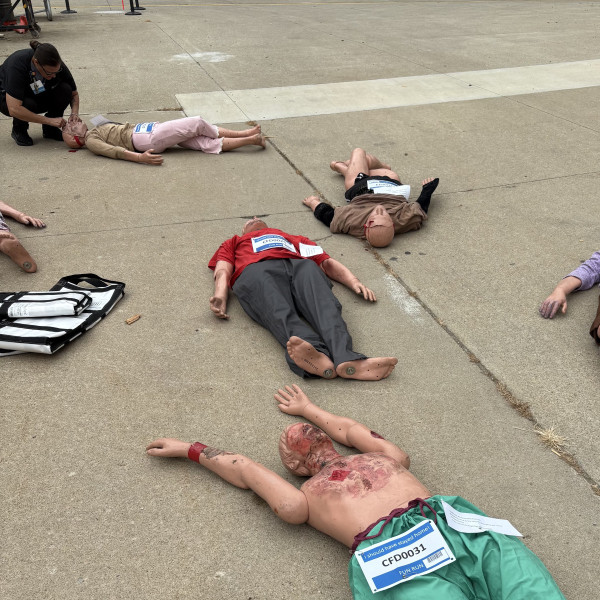
THESE PHOTOS SHOW SIMULATION EXERCISES WITH MANNEQUINS AND VOLUNTEER ACTORS WEARING REALISTIC INJURY MAKEUP, NOT REAL PATIENTS.
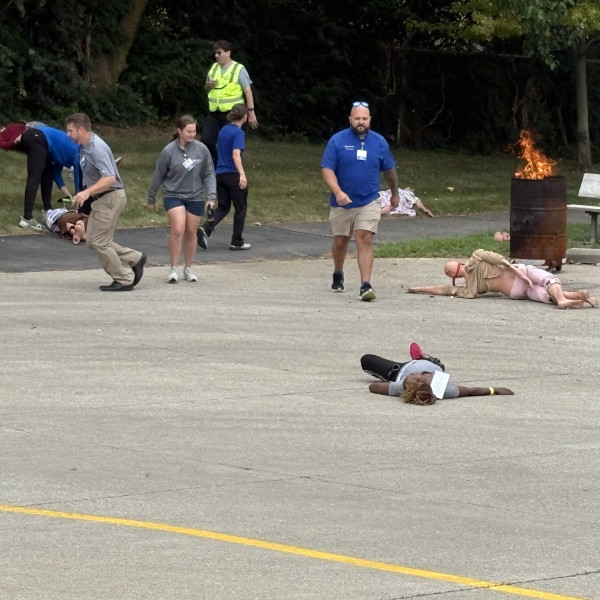
At the Columbus Fire Training Academy, first responders and medical teams spent the day preparing for something they hope never comes: a mass casualty event.
The training was designed to mimic real-world chaos, with two scenarios, a vehicle incident in a crowd and a simulated explosion at a race. Fire, police and medical professionals worked together to respond quickly to simulated victims.
Those “victims” were OhioHealth emergency medicine residents, who were covered in makeup by OhioHealth’s team of simulationists to resemble burns and other traumatic injuries.
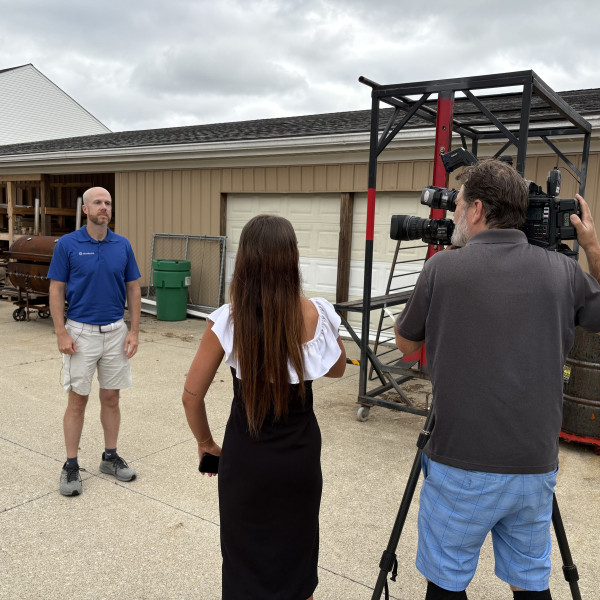
“It’s quite another experience when you’re out in the elements actually dealing with the smells, the sights, the sounds and actually having to triage patients appropriately, get them the care that they need and being able to do that in this environment where we’re simulating that makes it so that you’re prepared to handle it when it actually happens,” Brad Gable, MD, OhioHealth medical director for simulation, told NBC4.
The exercises focused on skills that are critical in large-scale emergencies like communication, teamwork and triage. Responders practiced a new color-coded system using slap bracelets to identify priority patients with the worst injuries.
Winnie Gikunda, M.B.B.Ch.B., an OhioHealth emergency medicine resident who was made up with fake injuries and placed near the explosion site, said the experience was eye-opening.
“It’s a very surreal feeling, like, ‘Oh, my God, this can happen to me and no one’s there to help me,’” she told Spectrum News 1. “So that definitely gave me a different perspective.”
Columbus Fire Medical Director Robert Lowe, MD said the ability to rehearse these scenarios is what prepares teams for the unthinkable.
“The first thing is just controlling the chaos,” he told NBC4. “You walk into a scene. There’s a lot of chaos, and what we need to do is rapidly restore order to that.”
Dr. Gable said that running these drills gives first responders and medical teams the chance to test their processes before they become a reality.
“When you put it into practice, you realize that the best laid plans … need to be tweaked a little bit and that we need to have different processes and adjust it,” he told Spectrum News.
The training brought together Columbus fire and police, race directors, amateur radio operators, the Red Cross and OhioHealth physicians. These are the same groups that would already be on-site at a large public gathering.
“Having a chance to actually see and take care of these situations before it happens makes sure that our participants, the spectators, everyone is safer as a result of it,” Dr. Gable said.
To view the full NBC4 story, click here. To view the full Spectrum News 1 story, click here.