

OhioHealth Marion General Hospital Receives First Milk Drop Donation
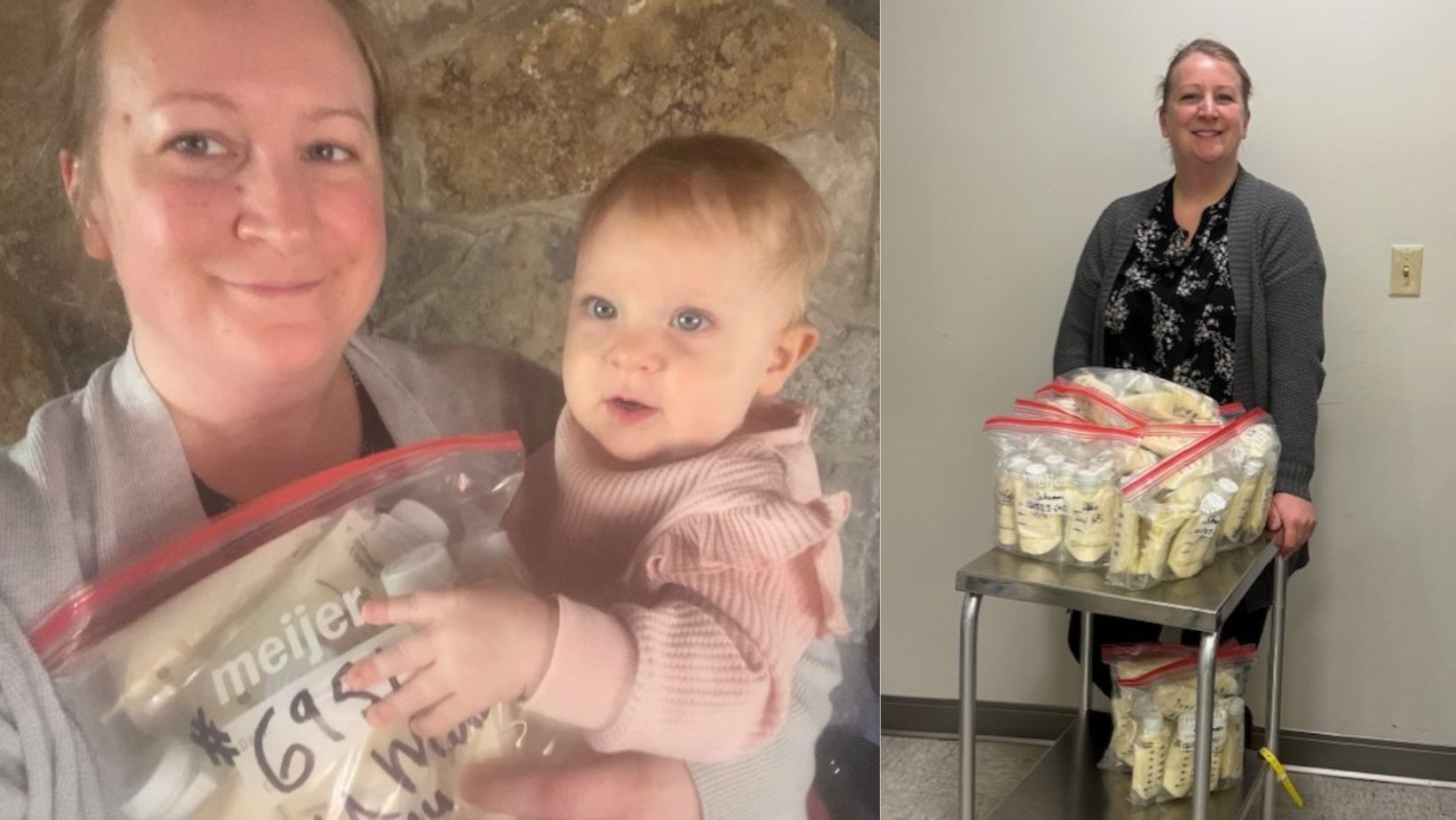
When Nicole Schuman packed up over 500 ounces of breast milk on a cold December day, she wasn’t just clearing out her freezer, she was changing lives. Her donation on Dec. 13, marked the very first for the new OhioHealth Mothers’ Milk Bank drop site at OhioHealth Marion General Hospital.
The drop site, which opened in September at 1000 McKinley Park Dr., is the milk bank’s 32nd location in Ohio. It offers moms a way to give back by providing life-saving nutrition for premature and vulnerable infants whose mothers are unable to provide them with milk.
The idea to donate came to Schuman through social media, where she often scrolled through posts while pumping to pass the time.
“That’s how I learned about babies that benefit from donated milk,” she said. “I learned more about pumping, other mothers struggling to pump and that I also was producing a little more than my son needed. I was very blessed that it was working for me and my baby. I am very proud to be able to donate and hopefully help several babies and moms.”
The milk collected at drop sites is transported to the milk bank in Columbus for pasteurization at no cost to donors. The donated milk is then distributed throughout the Eastern United States to babies in need. For moms like Schuman, having a local drop site makes donating more personal and convenient.
“Seeing a drop site in their community spreads the word about milk donation and the importance of pasteurized human milk,” said Chris Smith, RN, Outreach and Operations Coordinator at the OhioHealth Mothers’ Milk Bank. “It’s also comforting for moms to personally hand off their milk to someone who understands its significance.”
Pasteurized human milk is a critical resource for vulnerable infants, providing active growth hormones, infection-fighting enzymes and essential nutrients. Research shows that human milk can help preterm infants:
- Reach full feeds sooner and need fewer IVs
- Mature their intestines faster
- Spend fewer days in the hospital
- Reduce risk of necrotizing enterocolitis (a potentially fatal bowel infection)
- Reduce risk of sepsis (blood infection) and other infections
- Experience long-term IQ advantages over formula-fed infants
- Be healthier as older children and adults
The milk bank, under the guidelines of the Human Milk Banking Association of North America (HMBANA), accepts donations through a thorough screening process to ensure safety and quality.
Mothers interested in donating breast milk can email milkbank@ohiohealth.com or call 614.566.0630 to begin the screening process. This includes a phone interview, medical history review, signed medical release and a blood test to rule out infectious diseases.
To learn more, visit www.ohiohealth.com/services/womens-health/ohiohealth-mothers-milk-bank.
