OhioHealth Vein Clinic Earns Three-Year IAC Accreditation
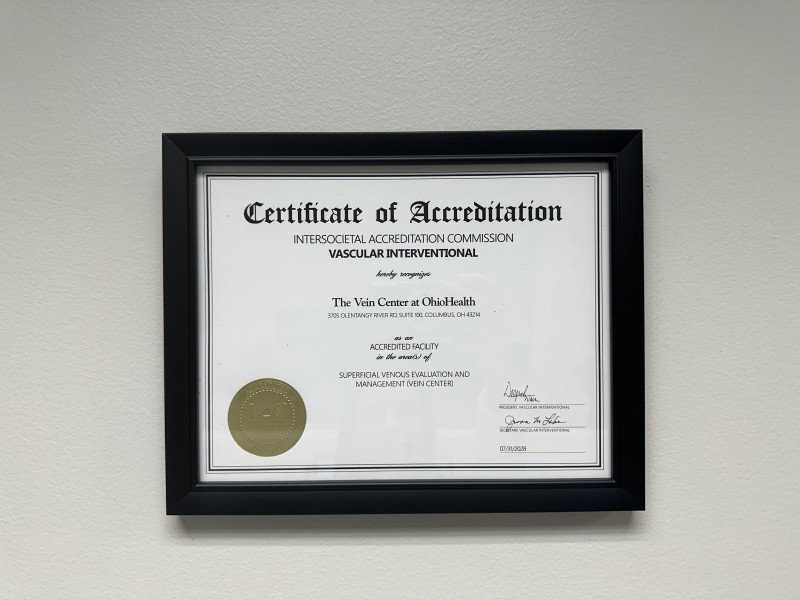
This year, the OhioHealth Vein Clinic at 3705 Olentangy River Road achieved Intersocietal Accreditation Commission (IAC), extending its accreditation for another three years.
“The IAC accreditation is multi-societal organization of a lot of vascular and radiology services that have come together to develop some standards that we strive for,” Paul Davis, OhioHealth nurse, said.
Within the three years and when it’s time to extend the accreditation, Davis said the team must supply the commission with their policies and procedures and all their quality metrics.
“We do monthly quality reviews and then every six months, we do a quality meeting to review the numbers,” Davis said.
According to the team, the IAC audits the clinic’s processes. The vein clinic team also does quality of life measures.
“All of our patients before and after their procedures, we go ahead and ask them about their symptoms and then we determine if the symptoms have improved and if their quality of life has improved after the procedure,” Davis said.
Davis said the accreditation process is a very extensive process. The final step in the process is a visit survey.
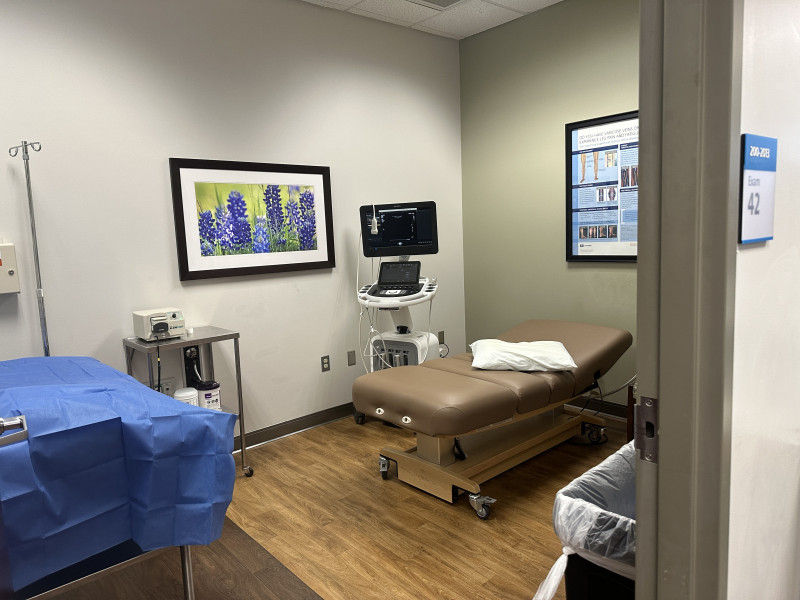
“We actually had a virtual visit,” Davis said. “They watched us do two procedures, watched our set up, looked at our working process, looked at our emergency equipment, they did everything to make sure that we’re doing everything properly.”
“I think it boils down to two things, it makes us introspective and objective about our efforts to provide the best possible care,” Raghu Kolluri, MD, OhioHealth system chief of vascular services, said. “Unless we objectively look at ourselves, we can’t improve the quality of care we provide for our patients, so the accreditation requires us to be objective to look at our own data, so that we continuously improve our quality and ultimately our patients’ benefit with it.”
 Regards to the team, he said it’s a team effort to receive IAC accreditation and maintain it.
“The team does a fantastic job and it just shows our commitment to go that extra step to provide the best possible care,” Dr. Kolluri said.
There are several OhioHealth Vein Clinic locations within the organization and throughout the state.
“The vascular section at OhioHealth, we strive to provide the best possible care for patients at every site throughout OhioHealth, no different for the vein center either,” Dr. Kolluri said.
At the clinic, Dr. Kolluri said that he and the team treat all different types of vein conditions.
“The condition is called chronic venous insufficiency (CVI) and it’s a spectrum just like any other disease process, it’s a spectrum,” Dr. Kolluri said.
Dr. Kolluri said it’s considered chronic if symptoms persist for more than two to three months.
“It’s nothing urgent or emergent about it, the first word out of the disease condition (chronic venous insufficiency) is chronic so you’ve got time on your hands but at the same time it’s going to be chasing you through your whole life,” Dr. Kolluri said.
He said it can start with just spider veins or varicose veins that may look abnormal but have no discomfort, or with swelling, skin-thickening which is called Lipodermatosclerosis. “But then it eventually goes all the way down to nasty venous ulcers which are wounds in the legs,” Dr. Kolluri said.
The most common symptoms for CVI are grouped into an acronym called HASTI which stands for heaviness, aching, swelling, throbbing and itching.
“Those are the most common, but it could be a combination of any of those symptoms sometimes folks will have other atypical symptoms in the legs too,” Dr. Kolluri said.
He recommends seeking care as soon as the discomfort starts, or when something just doesn’t feel right.
Those most at risk are split into two categories, the primary and the secondary. The primary group consists of individuals with no known underlying cause, though it often runs in the family.
“In that population, most often times, you see family history,” Dr. Kolluri said. “There’s no specific gene that has been isolated.”
The secondary is added causes such as occupation.
“Occupations that demand to be on your feet all the time, like us healthcare workers, teachers, hairstylists, dentists, dental assistants, whoever it is that are standing on their feet for prolonged periods of time,” Dr. Kolluri said.
The secondary category could also consist of people who have had blood clots in the past. “Their veins become somewhat damaged with the clot itself and then they can develop varicose veins called post-thrombotic syndrome (PTS),” Dr. Kolluri said.
He recommends seeking care as soon as there is any discomfort or pain. Rest assured, there are many treatment options available.
“The classic old treatment is the stripping, but we call it contemporary stripping, our vascular surgeons do a phenomenal job so patients can get back on their feet,” Dr. Kolluri said. “But it’s not necessary to do stripping on all of our patients, it’s actually a very minority of our patients who require this stripping.”
Other FDA approved treatment options include Sclerotherapy, radio frequency, laser therapy, Varithena and Venaseal (cyanoacrylate glue).
“We have multiple different techniques depending on what the patient’s anatomy looks like, reflux patterns look like, we tailor the treatment options,” Dr. Kolluri said
For more information about the 3705 Olentangy River Road clinic or to find another location, click here.
For more information about OhioHealth heart and vascular care, click here.