

OhioHealth Vice President Shares Her Cancer Battle to Support Patients
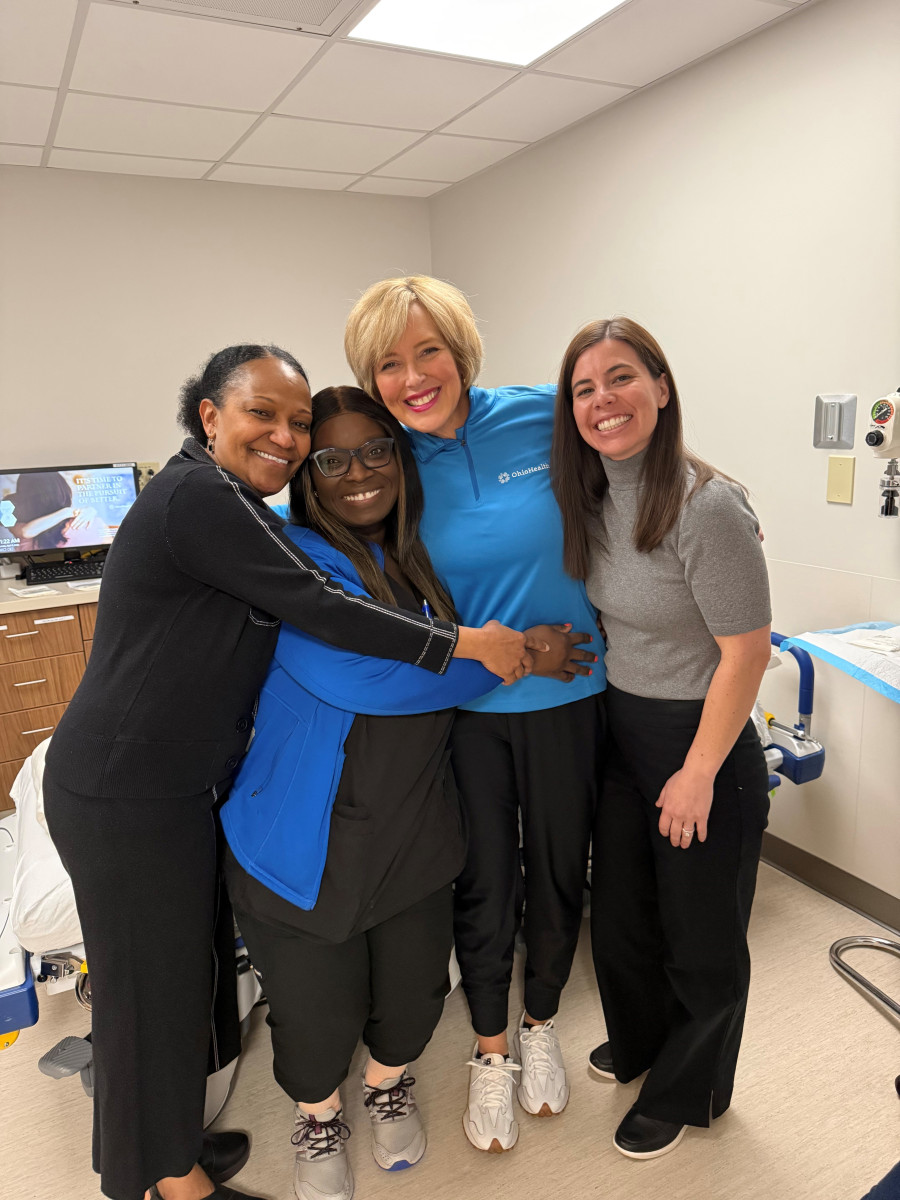
The OhioHealth Blood and Marrow Transplant and Cellular Therapy program is participating in a clinical drug trial to support new research for multiple myeloma. This research is helping to bring patients access to new treatment and therapy options.
According to the American Cancer Society, there are expected to be an estimated 36,000 new cases of multiple myeloma in the United States in 2026. Multiple myeloma is a cancer that begins in plasma cells in the bone marrow and can damage bones, organs and the immune system.
Heather Buck, vice president of OhioHealth patient experience, knows firsthand what it’s like to go through this challenging disease. In 2024, Buck was diagnosed with multiple myeloma.
“I had a bone marrow transplant, so I stayed in the hospital for about a month, and then you have 90 days of being totally isolated because your immune system can’t be around anything, so no pets, no plants, no friends,” Buck told NBC4 anchor Colleen Marshall.
Before Buck’s promotion, she worked as the director of patient services at OhioHealth for over six years.
“But to be a patient, it just changes your level of empathy because you can say, ‘I’ve been there. I understand,’ and you can be a deeper advocate to say, ‘Hey, when I was in a bed, this is how this felt,’ or when I was going through something, ‘It would have been nice if…’ and being able to act on those things has been incredible,” Buck said.
As a cancer survivor, Buck has felt a sense of purpose to help patients in any way that she can. While she also helps patients have a positive experience through her role at OhioHealth, she has now extended this support by volunteering in a drug trial and receiving bone marrow extractions. While this can be painful at times, Buck recognizes the privilege it is to help contribute to this pivotal research.
“They take additional bone marrow and additional bone samples from my body and use it for research,” Buck said. “So although painful, it’s an unbelievable opportunity for only a few people that can do this, right, so you have to be in the situation that I’m in to provide this data, so privileged to do it because someone must have done that for me along the way to provide the treatments that I was able to get.”
Yvonne Efebera, MD, medical director of OhioHealth’s blood and marrow transplant program (and Buck’s physician), said this research is very important, as it’s the only way to develop new drugs for these diseases.
“We know that the new drugs work. Say 20 years ago, the chance of a ten-year survival was only 20 to 30 percent. Now it’s close to 80 percent with all the new drugs, the targeted therapy,” Dr. Efebera said.
These trials are crucial for treatment advancements, but it can be challenging to get patients to participate. This makes it increasingly hard to get research results in a timely manner.
Dr. Efebera nominated Buck to be a Blood Cancer United Visionary of the Year. This initiative highlights community leaders who have taken charge to help fight against blood cancer.
“It used to be the Leukemia and Lymphoma Society, but blood cancer, it raises funds to help people that need help with any kind of blood cancers, so if they need help with making their co-pays, if they need help to get to and from chemo treatments, if they need help to pay for meals while they’re out of work, they do all kinds of great work,” Buck said.
Aside from giving bone marrow, Buck is also helping to raise money for research.
“I was particularly interested in joining and fighting for research dollars, so my goal is to raise $50,000, which is a very bold goal, but hopefully with everybody’s contributions, that way I can dedicate the $50,000 to a specific research project, and that’s why I chose that goal,” Buck said.

